
Dubai is known for its glittering skyline, luxury malls, and nonstop nightlife-but beneath the surface of its curated glamour lies a shadow economy that many visitors don’t talk about openly. While the city markets itself as a family-friendly destination with world-class theme parks and desert safaris, there’s a parallel scene that thrives in private settings: high-end companionship services. These aren’t advertised on billboards or tourist brochures. They’re whispered about in hotel lobbies, arranged through encrypted apps, and often masked as "personal assistants" or "tour guides." If you’re curious about what these services actually look like, you can read more about escort vip dubai offerings, though it’s worth noting that even the most discreet providers operate in a legal gray zone.
Dubai’s strict laws make public prostitution illegal, and any form of sexual exchange for money is punishable by fines, deportation, or jail time. But demand doesn’t disappear because it’s against the rules-it just goes underground. What you’ll find isn’t a row of neon-lit parlors like in some other cities. Instead, it’s a network of carefully vetted individuals who present themselves as companions for dinners, events, or private gatherings. Many of them are expats from Eastern Europe, Southeast Asia, or Latin America, drawn by the high pay and the chance to live in one of the world’s most expensive cities. They’re often fluent in multiple languages, well-dressed, and trained to navigate social situations with charm and discretion.
Who Uses These Services-and Why?
The typical client isn’t a tourist looking for a quick hook-up. It’s often a businessman on a multi-week assignment, a wealthy local seeking privacy, or someone who feels isolated in a city where social circles are hard to break into. For many, it’s not about sex-it’s about companionship. A conversation after a long day of meetings. Someone to share a meal with who won’t ask awkward questions. A person who remembers your preferences, knows how to dress for an event, and can make you feel seen in a place where you’re just another face in the crowd.
Some clients are repeat users. They build relationships with the same individuals over months or even years. These aren’t random encounters; they’re curated experiences. Agencies that operate behind the scenes screen their associates for background, language skills, and emotional intelligence. They don’t just pick someone because they’re attractive-they pick someone who can hold a conversation about art, business, or sports without blinking.
The Difference Between Companionship and Sex Work
There’s a line here that’s hard to define, even for those who live it. Many service providers will tell you they don’t offer sex. They offer time. Presence. A curated evening. But the reality is more complicated. Some clients expect more than dinner and a walk along the Dubai Marina. Some providers are open to physical intimacy if it’s mutually agreed upon-and if it’s kept strictly private. This is where the term dubai escort one comes up in conversations. It’s not a brand name. It’s slang for someone who works alone, without an agency, and sets their own boundaries. These individuals often charge more, because they control the terms. No middleman. No rules imposed by a third party.
But here’s the catch: even if no money changes hands for sex, the entire arrangement exists because of the unspoken possibility of it. That’s why law enforcement turns a blind eye to most of it-until something goes wrong. A dispute. A complaint. A viral video. Then the entire system cracks open, and someone gets deported.

How It All Works: From Booking to Meeting
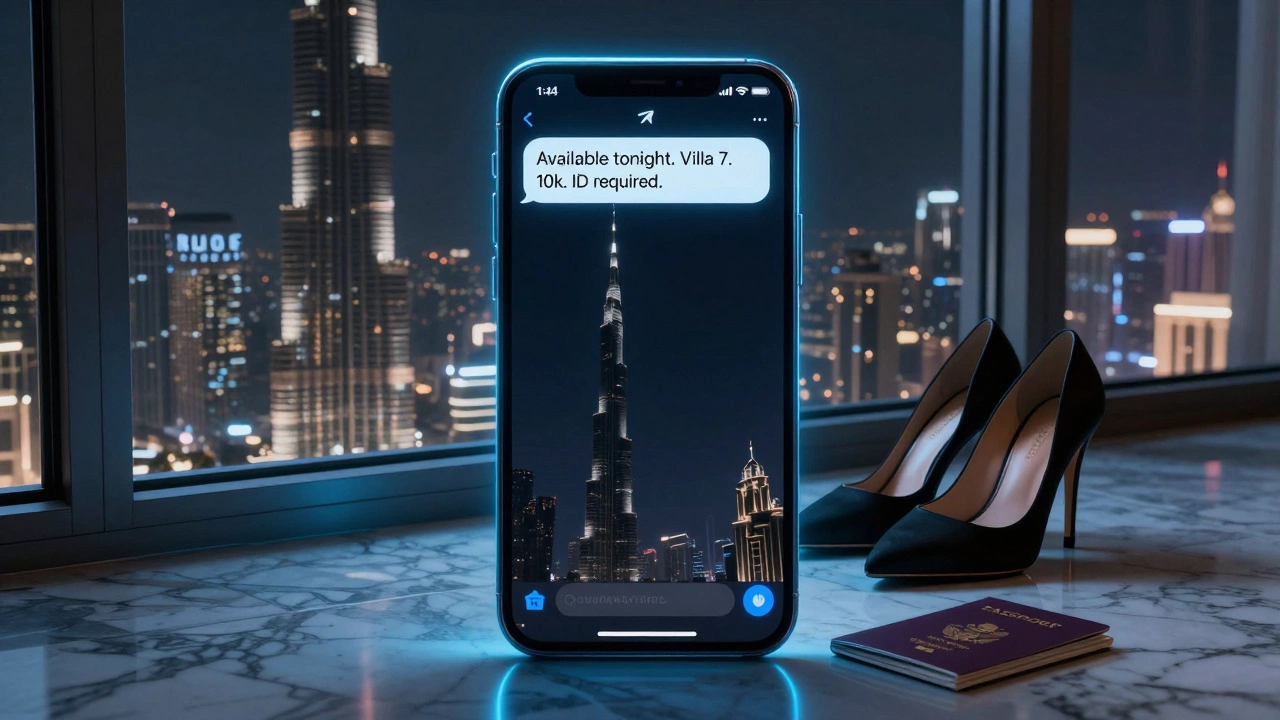
Booking isn’t done through Google Ads or Instagram. It’s through private Telegram channels, encrypted WhatsApp groups, or invite-only websites that look like luxury travel blogs. You don’t search for "sex escort dubai"-you get a link from someone who’s been there before. Once you’re in, you’re shown a portfolio: photos, profiles, availability, rates. Prices range from 1,500 AED for a two-hour dinner to 10,000 AED for an overnight stay in a private villa. Most require a deposit. All require ID verification.
Meetings happen in five-star hotel suites, rented apartments in Jumeirah, or even private yachts. Clients are usually asked to arrive alone, without cameras or recording devices. The provider arrives dressed for the occasion-sometimes in designer clothes provided by the client, sometimes in their own wardrobe. The interaction is carefully choreographed: drinks, conversation, maybe a walk on the beach. The rest is left to mutual understanding.
Risks and Realities
For the client, the biggest risk isn’t legal-it’s reputation. Dubai’s expat community is small. Word travels fast. Getting caught isn’t just about fines; it’s about being blacklisted from clubs, business events, or even your own company’s social circles.
For the provider, the risks are heavier. Many live in fear of being reported by jealous spouses, disgruntled clients, or even fellow workers. Some have been arrested during raids on apartments. Others have had their visas revoked without warning. There’s no union, no legal protection, no recourse if something goes wrong.
And yet, the industry keeps growing. Why? Because Dubai’s economy runs on desire-for luxury, for novelty, for escape. And as long as people are willing to pay for it, someone will be there to provide it.
What You Won’t See in the Brochures
Dubai’s tourism board will tell you the city is safe, clean, and family-friendly. And for the most part, it is. But beneath the polished surface, there’s a hidden layer of human need-loneliness, power, curiosity, boredom-that no brochure can capture. The same people who visit the Burj Khalifa at sunset might also book a private dinner with someone who’s paid to listen to them talk about their failures, their dreams, their regrets.
It’s not glamorous. It’s not romantic. It’s transactional. But it’s real. And it’s part of what makes Dubai, Dubai.